Research Programs
Collaboration is essential to accelerate research.
The Amyloidosis Research Consortium (ARC) operates research programs that help the development of new treatments and make them accessible to patients faster. Each initiative tackles a specific barrier, including slow drug development timelines and gaps in how we understand patient experiences.
Key Initiatives
ARC is committed to building strategic collaboration and an ecosystem of partners that create impact and drive reciprocal value together. Our innovative and rigorous programs are reshaping the research landscape in amyloidosis.
The Amyloidosis Forum
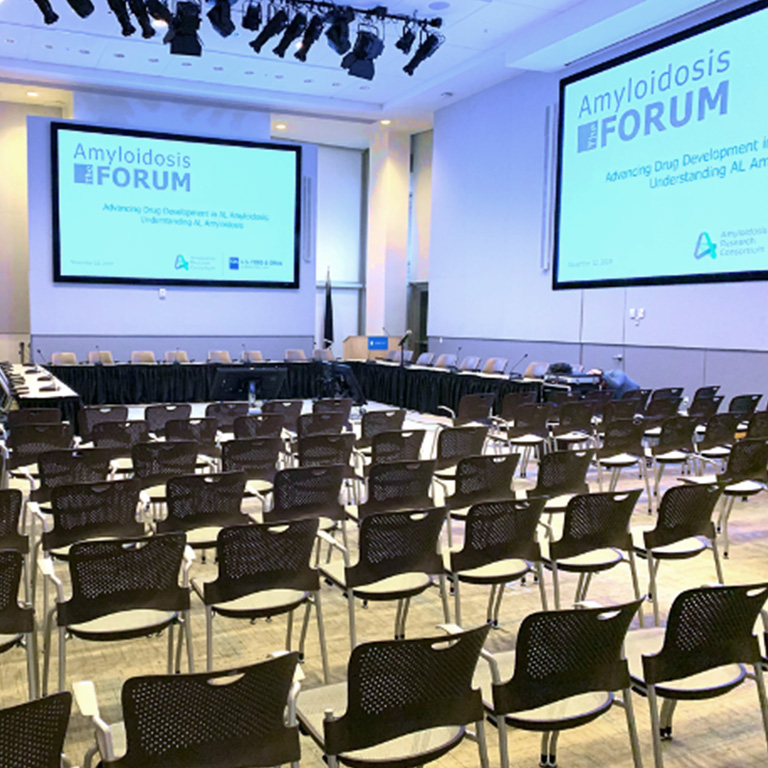
The Amyloidosis Forum is a public-private partnership founded by ARC, with participants including the U.S. Food and Drug Administration (FDA). It brings together researchers, drug developers, regulators, and other partners to optimize innovation and accelerate drug development through cross-disciplinary collaboration. The working groups and annual meeting reshape clinical trial design and accelerate the approval of treatments and cures for patients.
Community Research
ARC’s community research programs play a vital role in expanding our shared understanding of the perspectives of patients living with amyloidosis and their caregivers, as well as the opinions and practices of healthcare providers that treat them. This research helps identify where progress has been made in the diagnosis and management of amyloidosis as well as what unmet needs and challenges are still faced by the amyloidosis community.

ATTR-QOL (PRO Tool)
ARC’s unique patient reported outcome (PRO) tool, the Transthyretin Amyloidosis Quality of Life Questionnaire (ATTR- QOL), is the only disease-specific quality of life measure that helps researchers and clinicians collect information on patients’ experiences of ATTR. This PRO measure has been validated and is appropriate for all types of ATTR amyloidosis, including hereditary (ATTRv), wild-type (ATTRwt), ATTR cardiomyopathy (ATTR-CM) and ATTR polyneuropathy (ATTR-PN).
Research Roundtable
This white paper summarizes advancements in the field, key challenges, and consensus priorities for the amyloidosis research community that were identified and discussed by attendees of the 2024 ARC Research Roundtable Meeting. The information presented in this paper represents the opinions and outlooks of the global amyloidosis experts.
Data sharing and collaboration
Data sharing is critical to advancing science, fostering innovation, increasing transparency, and accelerating the pace of research. Importantly, data sharing reduces additional patient and clinician burden and recognizes the valuable contributions of study participants through expanded use of their data. ARC encourages our academic and industry partners to make their clinical and/or trial data accessible to each other for cross-disciplinary amyloidosis research and allow the field to:
- conduct efficient, cost-effective research
- foster collaboration across stakeholders
- build upon existing work
ARC’s research programs include the secondary use of completed clinical trial datasets, with a focus on studies using federated analytics. ARC also collaborates with industry and academic partners to make data available to each other for research purposes through data use agreements, as well as publicly available through data sharing platforms including Vivli, Project Yoda, RDCA-DAP, and other options.