
American Heart Month: Are We Missing ATTR-CM in Women?
Isabelle Lousada
Founder & CEO
Amyloidosis Research Consortium
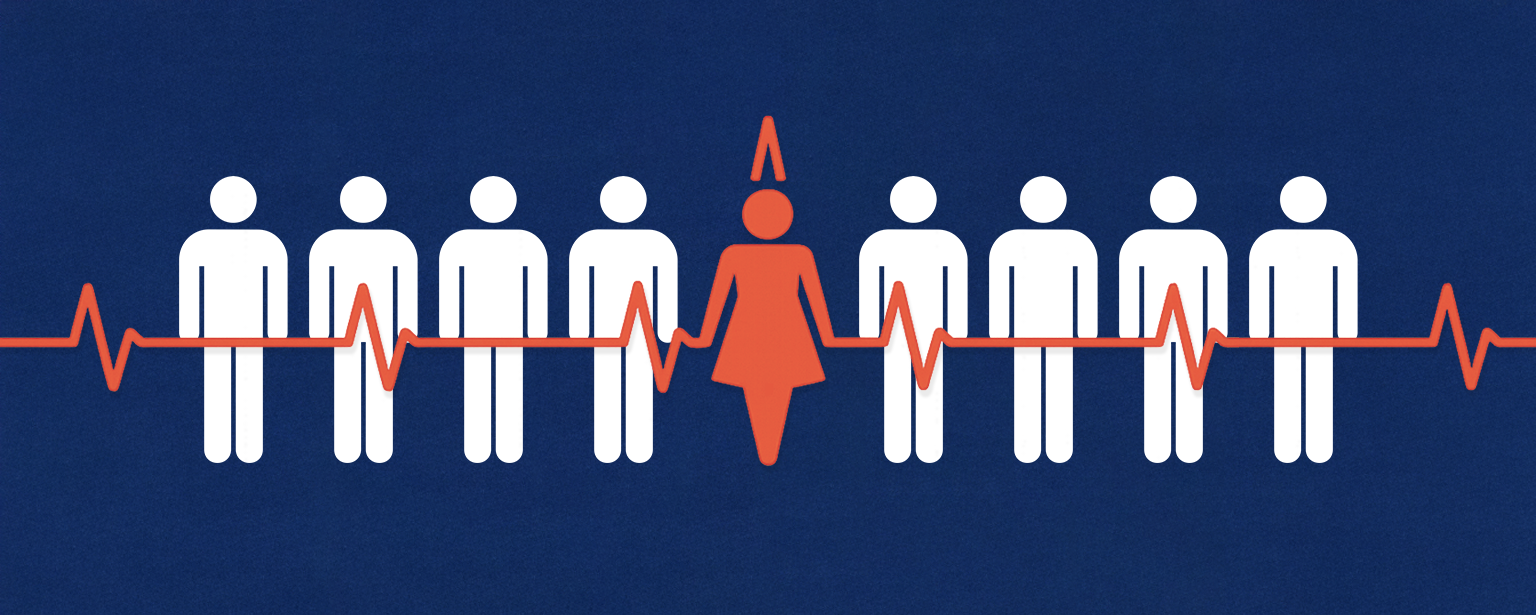
Transthyretin amyloid cardiomyopathy (ATTR-CM), including both wild-type (ATTRwt) and hereditary (hATTR) forms, is often described as a disease of older men. In published studies and clinical registries, men make up the majority of diagnosed cases, often 80 to 90 percent. That statistic has shaped clinical awareness, diagnostic pathways, and how symptoms are interpreted in practice.
But during American Heart Month, it is worth asking a harder and more important question. Do more men truly develop ATTR-CM, or are women simply less likely to be diagnosed?
The answer matters. Whether the explanation is biology, bias, or limitations in our diagnostic tools, women stand to lose if we do not look more closely.
What the numbers show and what they don’t
There is no dispute that most diagnosed ATTR-CM patients are men. Yet several consistent patterns suggest the story is more complex.
Women with ATTR-CM, both wild-type and hereditary, are typically diagnosed later in life than men, and the proportion of women increases in the oldest age groups. Women are also more likely to carry diagnoses such as heart failure with preserved ejection fraction (HFpEF), hypertensive heart disease, or age-related cardiac thickening. These conditions can overlap with, or obscure, infiltrative cardiomyopathies like amyloidosis.
Perhaps most telling, clinical suspicion for amyloidosis remains lower in women, shaped in part by the long-standing perception of ATTR-CM as a predominantly male disease. Together, these patterns raise a critical possibility. The sex gap may reflect how we look for disease, not just who has it.
Biology, bias, or blind spots?
There is no dispute that most diagnosed ATTR-CM patients are men. Yet several consistent patterns suggest the story is more complex.
True biologic differences
Women may have factors that delay amyloid deposition or reduce cardiac vulnerability, such as hormonal influences or differences in how the heart remodels under stress. Later age at diagnosis may reflect a form of protection that diminishes after menopause. However, definitive mechanistic evidence remains limited.
Diagnostic tools may be less sensitive in women
Current diagnostic pathways, including echocardiography, bone scintigraphy, cardiac MRI, and biomarker thresholds, were largely validated in predominantly male populations. Women often have less dramatic wall thickening, different remodeling patterns, and symptoms attributed to common heart failure syndromes. As a result, existing tools and thresholds may miss or delay diagnosis.
Lower clinical suspicion leads to delayed diagnosis
Women with cardiac symptoms are more likely to receive nonspecific diagnoses, even as disease progresses. If ATTR-CM is not considered early, appropriate testing may never occur. This leads to later diagnosis and missed treatment opportunities.
Importantly, hereditary ATTR reinforces this concern. Because hATTR is caused by an autosomal genetic variant, men and women inherit mutations at equal rates. Yet registry studies consistently show that women with hATTR are diagnosed at older ages than men with the same genetic risk. This suggests that sex influences how and when amyloidosis is identified, even when underlying biology is shared.
A cardiologist’s perspective
“Cardiac amyloidosis often hides behind familiar conditions like heart failure with preserved ejection fraction or hypertensive heart disease. In women especially, symptoms may be attributed to more common diagnoses, and classic features like wall thickening can be more subtle. If we think of ATTR more routinely, particularly in women over 75 with unexplained heart failure or orthopedic clues like carpal tunnel, we can detect disease earlier and change outcomes. Not all heart failure is the same, and recognizing these patterns is key to getting patients the right diagnosis and treatment.”
— Dr. Sarah Cuddy, Cardiologist and Amyloidosis Specialist
What comes next
To determine whether women are protected or overlooked, we need studies that treat sex as a core variable, not an afterthought. Population-based screening studies, sex-specific analyses of diagnostic performance, and better characterization of how ATTR-CM presents in women, especially those with HFpEF, are essential.
Without this work, we risk mistaking incomplete data for biological truth.
A call to action
If women are genuinely protected from ATTR-CM, understanding why could reshape future therapies. If women are being underdiagnosed, closing that gap is an urgent equity issue.
Either way, the gender question in ATTR is not academic. It is clinical.
This Women’s Heart Awareness Month, ARC is calling for greater awareness, stronger clinical suspicion, and focused research to ensure that women with amyloidosis are seen, studied, and served as fully as men.
Because heart disease does not look the same in women, and neither should our assumptions.
This content is original to the Amyloidosis Research Consortium (ARC). Excerpts may be quoted with attribution and a link to the original post. Full republication without prior permission is not permitted.
- Categories