Join our email list to stay up to date on the latest Amyloidosis news.
A report from Kristen Hsu, ARC’s Executive Director of Research
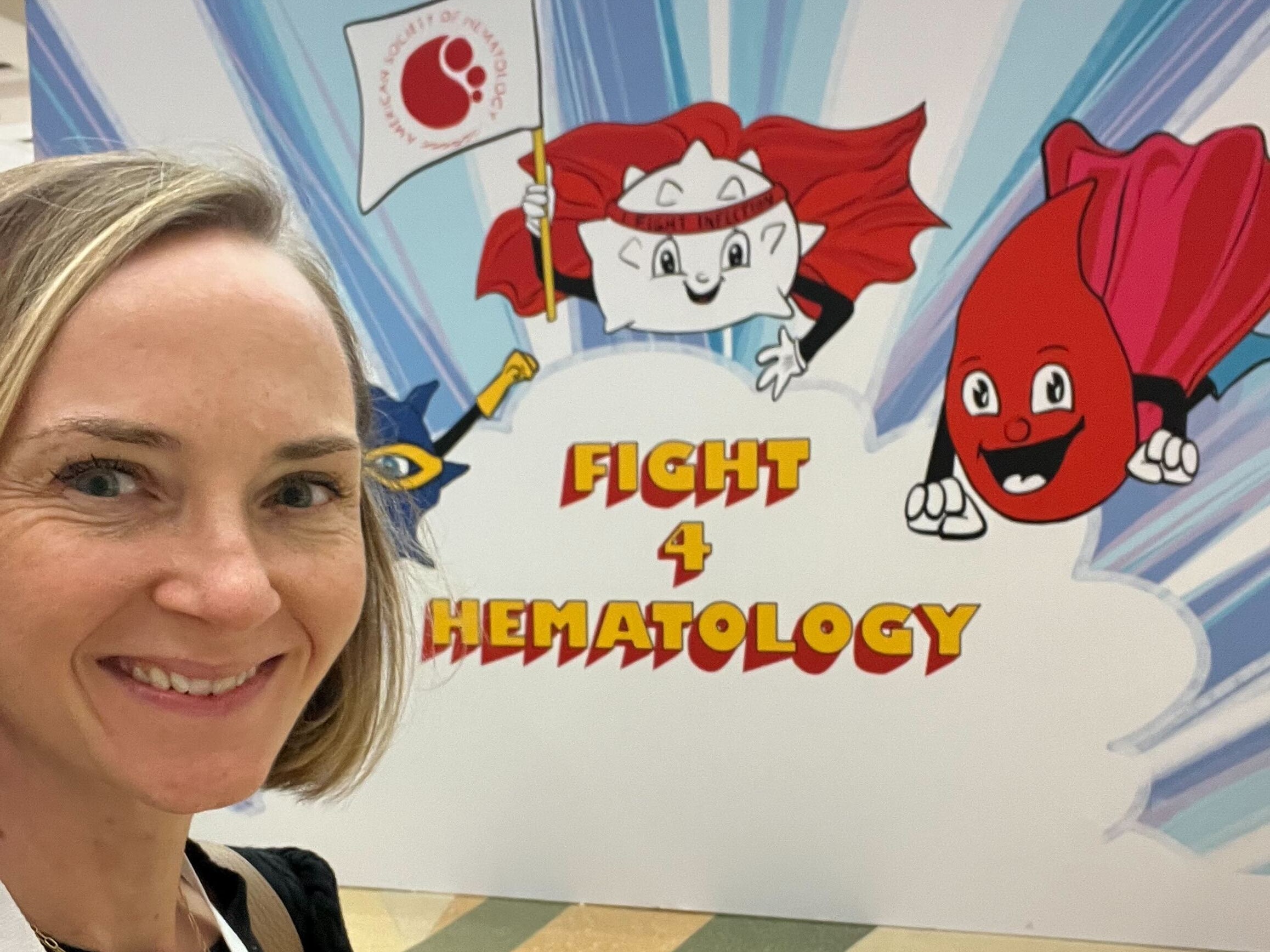
Kristen Hsu at the ASH 2025 Annual Meeting
The American Society of Hematology (ASH) Annual Meeting took place December 6–9 in Orlando, Florida, bringing together more than 30,000 clinicians, researchers, patient groups, and companies focused on blood diseases. For the AL amyloidosis community, ASH is one of the most important gatherings of the year. It is where new scientific findings are shared, promising treatments are discussed, and the next steps toward improving patient care take shape.
The Amyloidosis Research Consortium (ARC) was on the ground throughout the meeting — learning about new discoveries, presenting data from our community survey program, and meeting with partners committed to advancing care and research. Below, we share the most important updates in clear and accessible language to help patients and caregivers make sense of what this year’s meeting means for the future.
Why ASH Matters to Patients
In a rare disease like AL amyloidosis, progress depends on collaboration. ASH is where early ideas become real research and where researchers compare results to understand what works best. Companies also use this meeting to share updates about new treatments or clinical trials.
For patients, ASH helps shine light on where care is headed- what is improving, what challenges remain, and what new possibilities may soon be available.
Big News Even Before ASH Began
Two important announcements came out just days before the conference:
A new treatment for lambda light chains is moving forward
Protego shared that its new lambda light chain stabilizer will move ahead to a pivotal clinical study. Stabilizers are drugs that try to prevent harmful light chains from folding incorrectly, which is the first step in forming amyloid deposits. This treatment is designed specifically for people with lambda-type AL amyloidosis.
New collaboration to target and clear amyloid deposits
NeurImmune announced a new global partnership with Alexion/AstraZeneca Rare Disease to develop NI009, a lab-made antibody designed to bind to lambda amyloid deposits and help the body clear them out. This approach complements anselamimab, another antibody therapy that recently showed encouraging Phase 3 results for kappa-type AL amyloidosis.
Together, these programs point toward a future where treatments may be matched more closely to each individual’s light chain type.
Better Tools for Diagnosis and Staging
A new staging system to better understand heart involvement
Researchers from the National Amyloidosis Centre shared a new way of staging AL amyloidosis when the heart is affected. The new system separates more advanced disease into two groups- Stage IIIb and Stage IIIc- based on a heart measurement called global longitudinal strain. Why this matters:
It provides a clearer picture of how sick patients truly are.
It shows that one group (Stage IIIb) lives longer than expected under older staging systems.
It identifies a smaller, higher-risk group (Stage IIIc) that may need different treatment strategies.
This helps doctors give more accurate information and helps researchers design better clinical trials.
Clues for detecting AL amyloidosis earlier
Another study looked at blood samples from thousands of people in the UK Biobank. Researchers found proteins that may signal a higher risk of developing cardiac amyloidosis almost 10 years before diagnosis.
In the future, this type of research could support earlier detection- before major organ damage occurs.
Early-Stage Research on Targeted Antibody Therapies
A team from Columbia University introduced an early antibody candidate called 1F10, designed to strongly recognize lambda amyloid fibrils. Like NI009 and anselamimab, this type of treatment helps the immune system identify and clear harmful deposits. Although still in early stages, it represents another step toward precision medicine in AL amyloidosis.
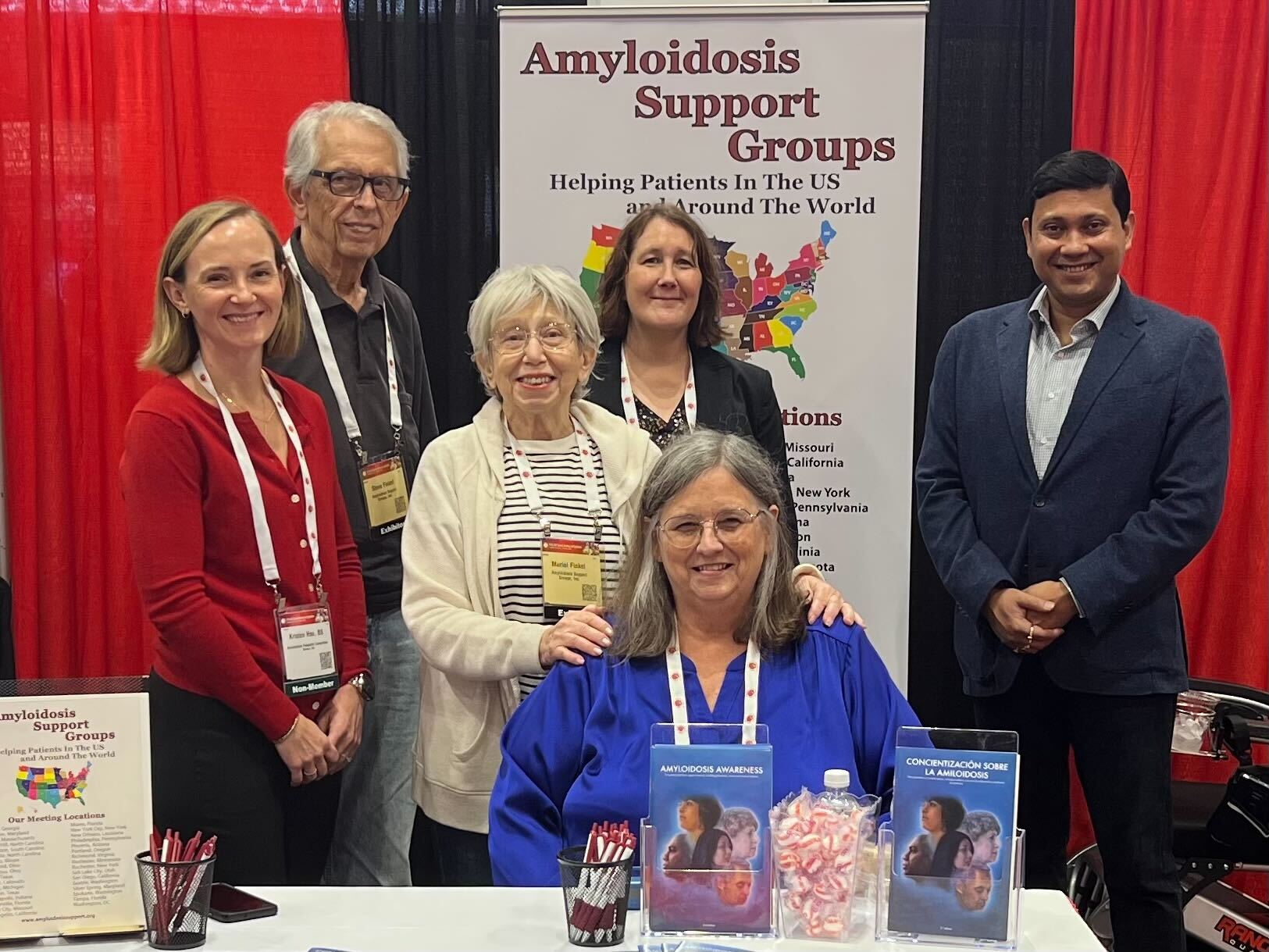
ARC and ASG group photo
Updates in Treatment for Newly Diagnosed Patients
Strong results for daratumumab-based therapy (D-VCd)
Boston University shared results from the AQUARIUS study, which looked at daratumumab combined with bortezomib, cyclophosphamide, and dexamethasone (known as D-VCd). Key findings:
More than 90% of patients responded to treatment.
Many showed improvement in daily function and symptoms.
These results continue to support D-VCd as an important first-line treatment option for newly diagnosed patients, especially those with heart involvement.
Progress in Relapsed or Refractory AL Amyloidosis
Several presentations focused on patients whose disease either did not respond to earlier treatments (refractory) or returned after responding (relapsed).
Etentamig: A promising bispecific antibody
Etentamig is a bispecific antibody, meaning it connects immune cells to plasma cells- the source of harmful light chains. Early results showed:
Fast and deep responses
A manageable safety profile
The next phase will study a once-monthly dose that may be easier for patients to receive.
AT-02: Helping clear amyloid deposits from organs
AT-02 is a fusion protein designed to help clear (deplete) amyloid from organs like the heart, kidneys, and other tissues.
The study included patients who already had excellent blood responses from prior therapy but still had organ damage. After taking AT-02, patients showed improvements in:
Heart strain
Kidney function
Walking distance
Quality of life
These encouraging results support moving AT-02 into Phase 3 clinical trials of patients with AL amyloidosis who achieved a CR/VGPR and continue to show signs of renal and/or cardiac organ disfunction.
Venetoclax for patients with t(11;14)
Venetoclax is a targeted therapy used in some blood cancers. It works best in patients whose disease has a genetic feature called t(11;14)- found in about half of AL amyloidosis patients.
The trial showed:
Very high response rates
Many complete responses
Heart and kidney improvements in some patients
This supports venetoclax as an important option for people with this genetic profile.
CAR-T therapy: A potential “one-time” treatment
CAR-T therapy uses a patient’s own immune cells, modified to recognize and destroy plasma cells. Early results from the NEXICART-2 study were striking:
Many patients responded within one week
Most tested had no detectable disease after treatment
Several showed organ improvement
Many remained in remission for months afterward
While still early, these results give hope that CAR-T could someday offer a one-time treatment option for relapsed disease.
Additional Clinical Trials Now Enrolling
Several bispecific antibody trials continue to expand, including:
Linvoseltamab
Elranatamab
Teclistamab
The growing number of studies reflects strong interest in improving treatment options for relapsed AL amyloidosis.
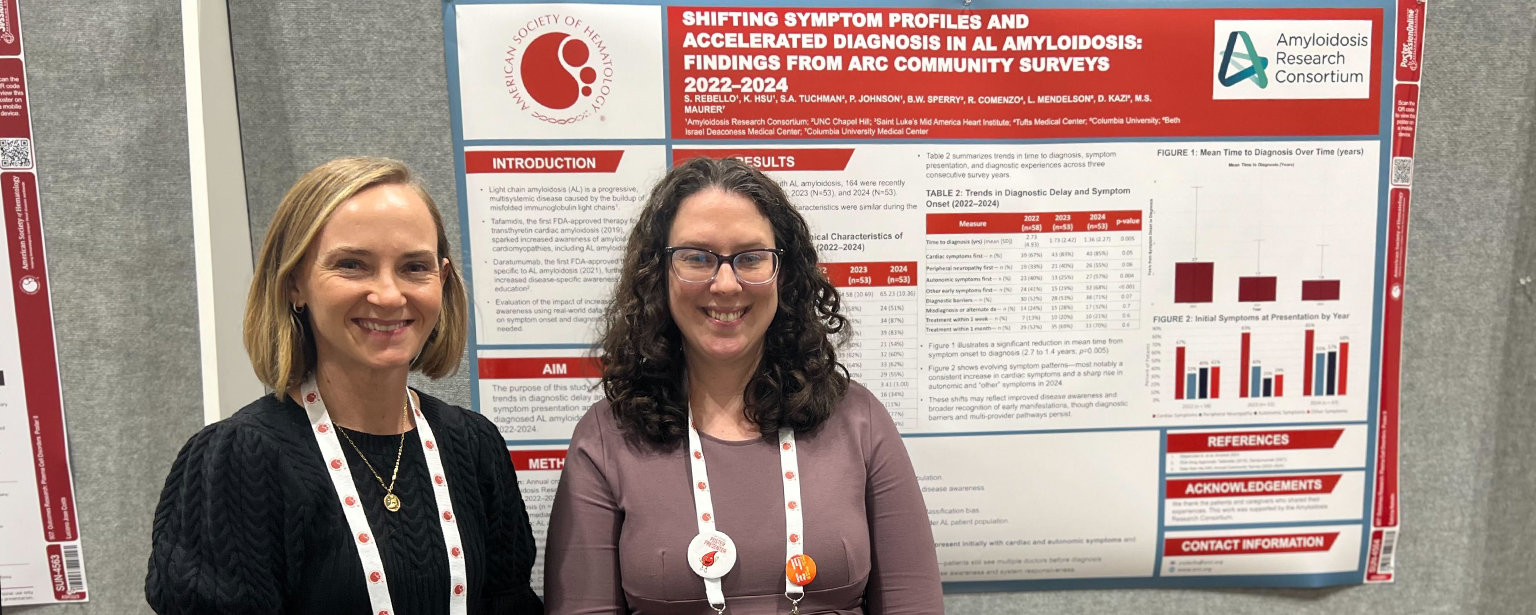
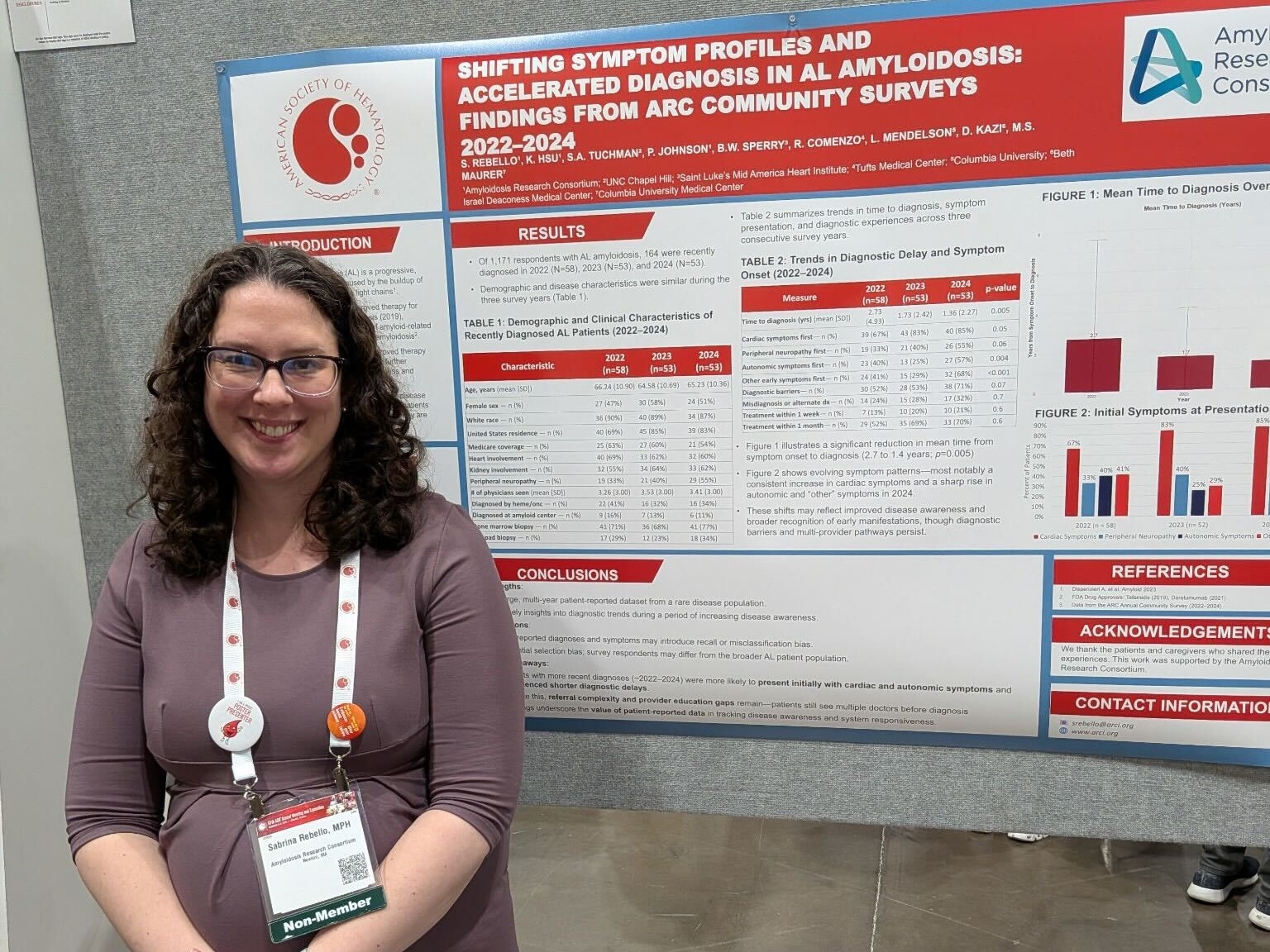
Sabrina Rebello presenting ARC’s research at the meeting
ARC’s Presence and Contributions at ASH
Sabrina Rebello, ARC’s Senior Manager of Research, presented new findings from our Community Survey, including a poster titled “Shifting Symptom Profiles and Accelerated Diagnosis in AL Amyloidosis; Findings from ARC Community Surveys 2022-2024.” Key takeaways included:
Patients diagnosed between 2022–2024 reported shorter delays before diagnosis.
More patients reported heart-related or autonomic symptoms at the start of their illness.
Many still needed to see several doctors before receiving the correct diagnosis.
These results highlight the need for better clinician education and referral pathways- areas ARC continues to champion.
Throughout the meeting, ARC also met with numerous partners across academia, industry, and patient advocacy. These discussions help shape shared priorities and support progress through the Amyloidosis Forum and our broader research efforts.
Looking Ahead
ASH 2025 showcased meaningful progress for the AL amyloidosis community:
Earlier detection is becoming more achievable.
Staging systems are improving.
New treatments are advancing for both newly diagnosed and relapsed patients.
Research into clearing amyloid deposits and using cell-based therapies continues to grow.
Together, these advances strengthen hope for better outcomes and more personalized care.
ARC remains committed to supporting patients, families, clinicians, and researchers as we work toward a future where AL amyloidosis is diagnosed earlier, treated more effectively, and managed with the full benefit of scientific innovation.
If you have questions about these updates, need help understanding your options, or want to learn more about clinical trials, please connect with our team.