Archives: Resources

The Inflation Reduction Act: The Devil is in the Details for Patients with Rare Diseases
David Gibson, PhD, CMPP Director of Strategic Programs, Engagement, and Communications Amyloidosis Research Consortium The Inflation Reduction Act (IRA), signed into law on August 16, 2022, tackled a wide range of issues from tax reform, energy security, environmental and...
Read More

December 22, 2023
FDA Approves WAINUA™ (Eplontersen) for Treatment of Hereditary ATTR Amyloidosis Polyneuropathy
BREAKING NEWS: The U.S. Food and Drug Administration has approved AstraZeneca and Ionis’ WAINUA™ (eplontersen) for the treatment of the polyneuropathy of hereditary transthyretin-mediated amyloidosis in adults, commonly referred to as hATTR-PN or ATTRv-PN. WAINUA™ (eplontersen) is a Ligand-Conjugated Antisense...
Read More

November 13, 2023
Forging the Path to a Cure
We continue to innovate and improve research and programs to ensure all patients have access to quality care and effective treatment. Your donation will help forge the path to a cure for amyloidosis.
Read More
October 9, 2023
FDA Issues Complete Response Letter for Patisiran for Treatment of Cardiomyopathy of ATTR Amyloidosis
BREAKING NEWS: The U.S. Food and Drug Administration has issued a complete response letter for Alnylam Pharmaceuticals' Patisiran, an investigational RNAi therapeutic for the treatment of the cardiomyopathy of transthyretin-mediated (ATTR) amyloidosis. This letter denies approval for the treatment of...
Read More
May 3, 2023
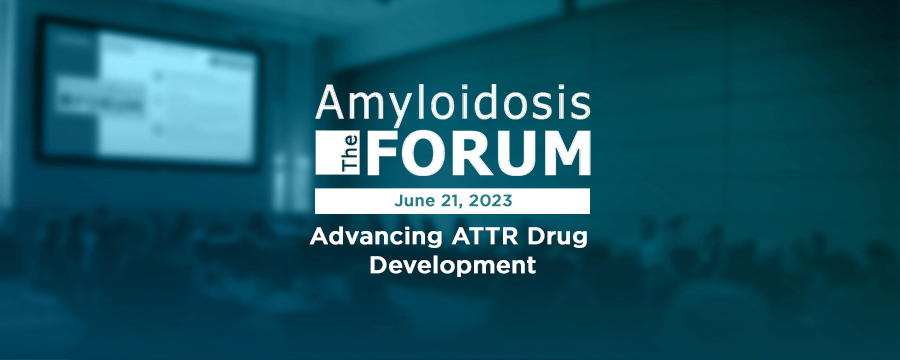
NIH Funds First Step Towards Advancing ATTR Amyloidosis Drug Development
The NIH has awarded the Amyloidosis Research Consortium $40,000 to support the organization's Amyloidosis Forum meeting on "Advancing Drug Development in ATTR Amyloidosis in an Evolving Treatment Landscape." Formed in 2019, The Amyloidosis Forum (https://amyloidosisforum.org) has been developed through a...
Read More
- Categories
- Archives
- March 2026 (2)
- February 2026 (1)
- January 2026 (1)
- December 2025 (1)
- November 2025 (1)
- October 2025 (2)
- July 2025 (2)
- May 2025 (1)
- March 2025 (1)
- November 2024 (1)
- October 2024 (1)
- March 2024 (1)
- February 2024 (1)
- December 2023 (1)
- November 2023 (1)
- October 2023 (1)
- May 2023 (1)
- March 2023 (2)
- February 2023 (1)
- October 2022 (3)
- July 2022 (1)
- June 2022 (1)
- April 2022 (1)
- February 2022 (2)
- November 2021 (2)
- September 2021 (1)
- June 2021 (1)
- May 2021 (1)
- March 2021 (1)
- February 2021 (1)
- January 2021 (2)
- December 2020 (1)
- November 2020 (2)
- October 2020 (1)
- September 2020 (1)
- August 2020 (1)
- July 2020 (1)
- February 2020 (2)
- January 2020 (2)
- December 2019 (1)
- November 2019 (3)
- October 2019 (1)
- September 2019 (3)
- August 2019 (1)
- June 2019 (1)
- May 2019 (2)
- March 2019 (2)
- February 2019 (1)
- January 2019 (1)
- December 2018 (3)
- October 2018 (2)
- September 2018 (1)
- August 2018 (2)
- July 2018 (2)
- April 2018 (3)
- March 2018 (2)
- February 2018 (3)
- January 2018 (2)
- December 2017 (4)
- November 2017 (2)
- October 2017 (1)
- August 2017 (1)
- July 2017 (1)
- June 2017 (1)
- April 2017 (1)
- February 2017 (1)
- December 2016 (2)
- October 2016 (2)
- September 2016 (1)
- July 2016 (3)
- June 2016 (4)
- May 2016 (1)
- April 2016 (2)
- March 2016 (1)
- February 2016 (2)
- December 2015 (1)
- November 2015 (2)
- October 2015 (1)
- September 2015 (1) More